


A chalky mark after washing is not a chemical diagnosis: it may be undissolved detergent, a hard-water deposit, dried pharmaceutical excipient, or permanent colour damage. By separating the deposit from the pharmaceutical soil, checking the machine and wash records, and running a controlled reprocess, you can decide whether to correct the batch, rewash the garment, or reject it.
Key takeaways
- Confirm whether crystals are product residue, minerals, dye transfer or pharmaceutical soil.
- Run a deposit test before adding detergent, bleach or another wash cycle.
- Dissolve powder fully, check dosing and account for hard water.
- Reject textiles when controlled reprocessing cannot restore safe, acceptable fabric.
Identify What Staff Mean by “Crystal Powder” Before Changing the Wash
“Crystal powder” is not a chemical diagnosis. Before changing the wash, determine whether staff mean loose undissolved product, mineral crystallisation, pharmaceutical soil, or a mark that survived washing. A crystal powder pharmaceutical laundry stain needs identification before more detergent or bleach is added.
- Remove loose material onto clean paper. Dry, chalky grains that disperse in warm water point to undissolved detergent, builder, or finishing chemical. A deposit that reforms as the fabric dries, feels gritty, or leaves a pale edge points to calcium or magnesium crystallisation from hard water.
- Inspect the residue and fabric separately. Dried tablet excipient may look white but feel sticky, waxy, or powdery; ointments and oils leave translucent or greasy patches. Iodine, povidone-iodine, dyes, chlorhexidine, and other pharmaceutical residues need a substance-specific check, not a visual assumption.
- Rinse a small affected area with clean water and inspect it wet and dry. A removable surface deposit lightens or disappears; a true post-wash stain remains after the deposit is gone. On coloured fabric, chalk that rinses away is different from local colour loss caused by alkaline chemistry, bleach, heat, or dye incompatibility.
- Record detergent grams per kilogram, water volume, hardness, temperature, pH, rinse count, loading, and chemical lot. Without those figures, recurring crystal powder white fabric stain problem marks cannot be assigned to formulation, dosing, water, or machine process.
Visual whiteness does not prove removal of an active pharmaceutical ingredient. For potent, sensitising, or hazardous products, use the site’s validated residue or contamination-control method before reprocessing.
Use a Deposit Test Before Rewashing White or Coloured Textiles
A dry, chalky mark is not proof of detergent residue. Test a small area before rewashing: a crystal powder white fabric stain problem can be undissolved powder, hard-water scale, dried excipient, or a pharmaceutical product residue.
1. Photograph the mark, then collect loose material with a clean spatula into a labelled container. Record colour, texture, odour, fabric, wash date, chemical lot, and whether the mark sits on the surface or penetrates the fibres.
2. Moisten a separate part of the mark with deionised water. Powder residue should soften, disperse, or rinse away; calcium or magnesium scale remains gritty. A brown or yellow stain points towards iodine or povidone-iodine, while a greasy translucent halo points towards ointment or oil.
3. Blot the damp area with white laboratory tissue. A coloured transfer indicates dye, tablet coating, or another coloured product residue. Do not identify chlorhexidine by appearance alone; it can leave pale yellow-brown deposits and needs a validated chemical test or laboratory confirmation.
4. Test a retained deposit, not the garment, with a site-approved iodine method. A starch reagent turning blue-black supports iodine presence, but a negative result does not clear povidone-iodine or another pharmaceutical product.
5. Compare the mark after a controlled deionised-water rinse. A deposit that disappears is surface contamination; local bleaching, fibre damage, or unchanged colour indicates altered dye or persistent pharmaceutical soil.
A crystal powder colour fabric stain problem needs extra caution: do not apply chlorine bleach as a diagnostic step. It can destroy susceptible dyes and convert a removable deposit into permanent shade loss. Visual whiteness never proves that an active pharmaceutical ingredient has been removed; use substance-specific residue testing for hazardous or potent products.
Correct Dissolution, Dosing and Water-Quality Failures
Prevent crystal powder pharmaceutical laundry stains by dissolving the measured product completely before it reaches the textiles. Direct powder contact, caked product, cold water, a low water level, short flushing, or an overloaded drum creates concentrated alkaline or salt spots that appear white on white fabric and chalky on coloured fabric.
- Weigh dry goods and set the dose in grams per kilogram; never add extra detergent to compensate for an untested stain.
- Break caked powder and feed it into flowing water, not onto damp textiles.
- Use the machine’s specified water level and allow enough wetting time before the main wash.
- Keep the load below the washer’s rated capacity so liquor and powder circulate evenly.
- Record wash temperature, pH, water volume, rinse count, and chemical lot for every trial.
- Measure incoming-water hardness and alkalinity; Mumbai supply, borewell, tanker, and stored water can differ substantially.
- Add an extra intermediate rinse when the load, product, or water leaves visible residue.
For recurring crystal powder white and colour stains pharmaceutical laundry in Mumbai, compare these records before changing formulation or bleach. Calcium and magnesium can combine with carbonate or silicate builders and crystallise during drying. Remove loose material, then rewash with correctly dissolved, correctly dosed product and inspect after drying.
Use acid souring only with controlled concentration, contact time, fibre compatibility, pH endpoint, and chemical-release checks.
Separate Colour Loss, Dye Transfer and Pharmaceutical Carryover
Do not use chlorine bleach as the first response to a crystal powder colour fabric stain problem. Rinse a hidden area with water at the garment’s care temperature and inspect it: a chalky deposit that fades or moves is removable, while a lighter patch, shade shift, or tender fibre indicates colour damage.
Chlorine can strip dyes, weaken fibres, and yellow fabric; keep it physically and chemically separate from acids used for souring or descaling.
| Failure | What you see | What it means |
|---|---|---|
| Surface deposit | Chalky film that changes after controlled rinsing | Undissolved powder, detergent, or mineral residue |
| Dye transfer | Coloured haze or shading spreading from another garment | Migrated dye, not loss of the fabric’s own colour |
| Chemical colour loss | Lighter patch at a contact area, sometimes with tendering | Oxidant, alkali, heat, or incompatible finishing chemistry |
| Pharmaceutical carryover | Mark remains after rinsing or resembles product residue | Do not assume visual cleanliness proves drug removal |
Treat crystal powder pharmaceutical laundry stains as a contamination question as well as a colour question. Send a representative piece for the validated residue method required for the active ingredient, particularly with potent, sensitising, or hazardous medicines. EN 14065 RABC supports biocontamination control, not proof of chemical residue removal.
- Compare the affected textile with an unstained control swatch.
- Test the wash bath or rinse water for colour migration and visible solids.
- Record detergent grams per kilogram, pH, temperature, water hardness, rinse count, load size, and chemical lot before changing the process.
Run a Controlled Trial and Decide Whether to Reprocess or Reject
For recurring crystal powder white and colour stains in pharmaceutical laundry in Mumbai, run one controlled trial before changing chemistry, temperature or dosing. Use the same fabric type, soil load and machine, then alter one variable only.
Record:
- Dry-load weight and detergent grams per kilogram
- Water volume, hardness in mg/L as CaCO3, temperature and pH
- Machine loading, powder addition point, wash time and rinse count
- Chemical names, dosage, supplier and lot numbers
- Stain location, fabric colour, photographs before and after treatment
Obtain the machine’s dosing and temperature records, water-hardness report, chemical safety data sheet, product technical sheet and supplier certificate of analysis. For potent, sensitising or hazardous pharmaceutical residues, obtain a validated residue or contamination-control method; whiteness alone does not prove removal.
| Result | What it means | Decision |
|---|---|---|
| Deposit disappears after controlled rinsing | Surface powder or mineral residue | Reprocess with corrected dissolution, loading or rinsing |
| Colour returns without bleaching | Removable deposit, not dye loss | Reprocess under the validated recipe |
| Shade remains lighter, fibre is weakened, or drug residue remains | Permanent damage or unsafe carryover | Reject or quarantine; do not repeat harsher washing |
Treat a crystal powder white fabric stain problem separately from microbiological release and colourfastness. EN 14065 RABC controls biocontamination; it does not identify pharmaceutical residue.
Ask ALLIANCE INTERNATIONAL for lot-specific dosing guidance, water-hardness limits and compatibility data before comparing suppliers. Compare verified results per kilogram, not detergent price alone.
Related products
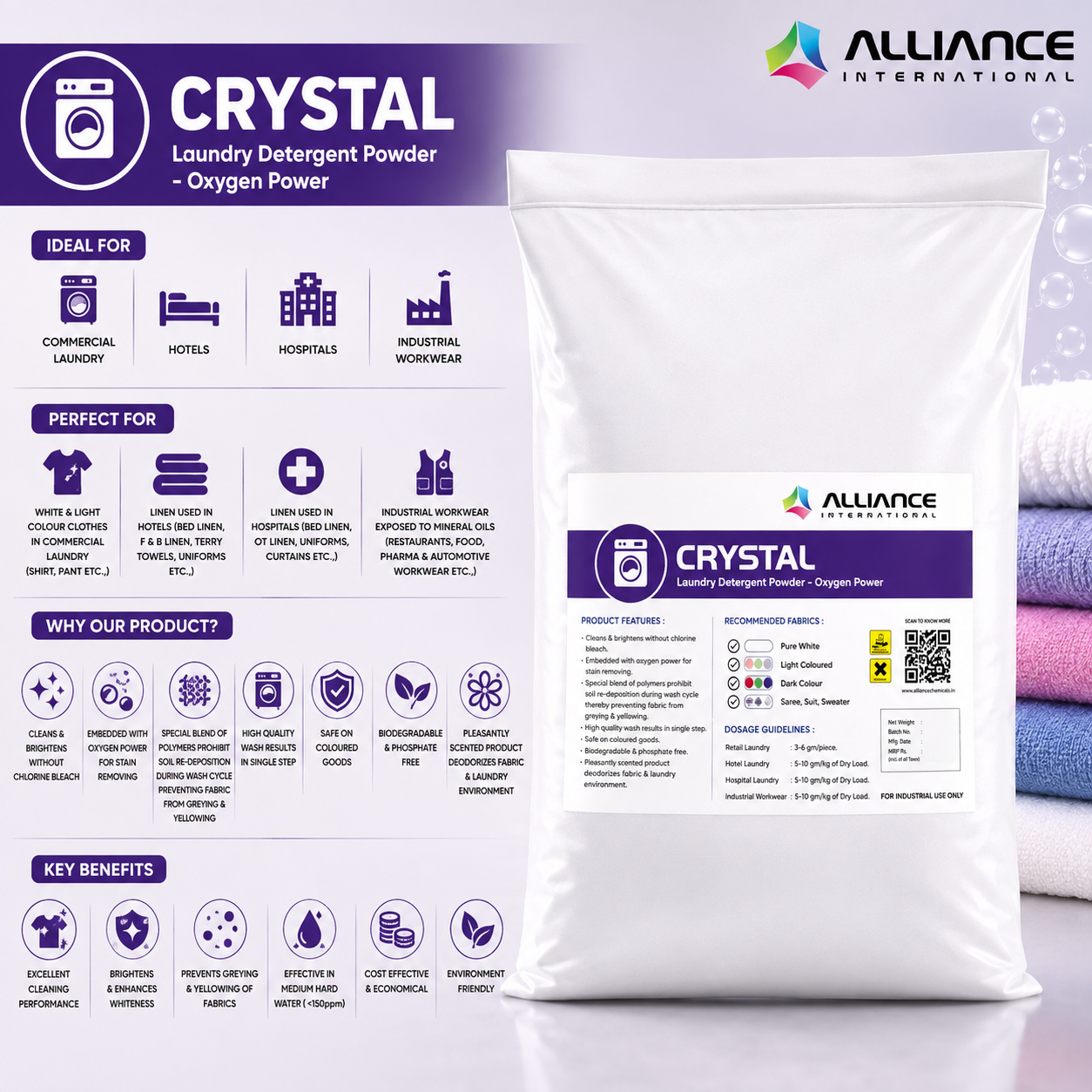 | Detergent Powder ₹8500 Alliance's CRYSTAL is an advanced heavy-duty detergent powder with built-in oxygen bleach recommended for main-line washing of all types of permanent... View product → |
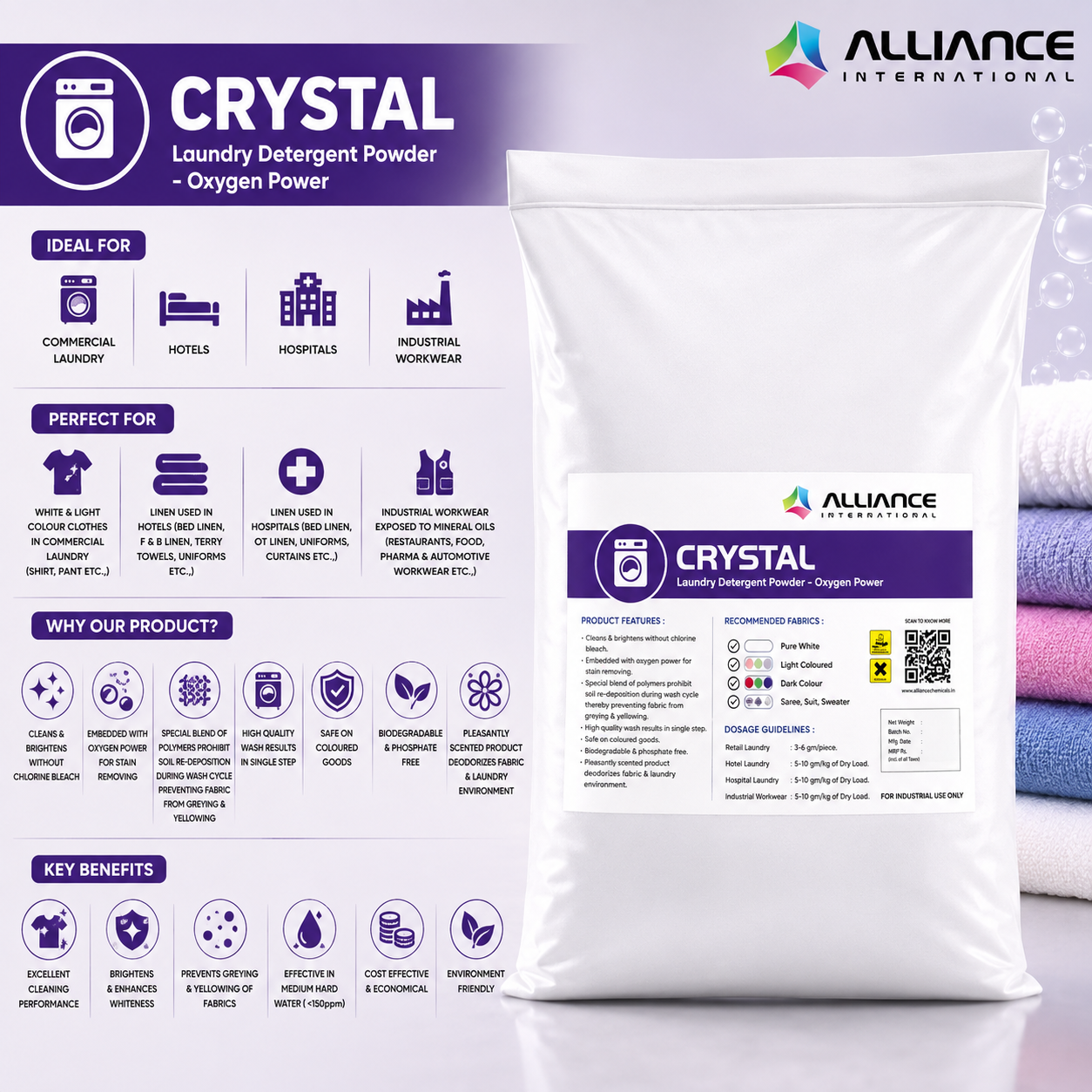 | Detergent Powder ₹2500 Alliance's CRYSTAL is an advanced heavy-duty detergent powder with built-in oxygen bleach recommended for main-line washing of all types of permanent... View product → |
Frequently asked questions
What can “crystal powder” mean in pharmaceutical laundry?
It can describe loose undissolved laundry product, mineral crystallisation, pharmaceutical carryover or a mark that survived washing. Identify the deposit before changing the wash formula.
How can you test a crystal powder stain before rewashing?
Collect a small deposit or inspect the affected area, then compare its behaviour with water and the textile. Use the result to distinguish product residue, minerals, dye transfer and pharmaceutical soil before reprocessing.
Why does laundry powder leave deposits on white or coloured textiles?
Common causes include poor dissolution, incorrect dosing, low wash temperature, inadequate water level, hard water and poor product distribution. Correct the specific failure rather than adding more chemicals.
When should pharmaceutical laundry be reprocessed or rejected?
Run a controlled trial on a representative textile. Reprocess when the identified soil responds without damaging colour or fabric; reject the item when staining, contamination or fabric damage remains unacceptable.