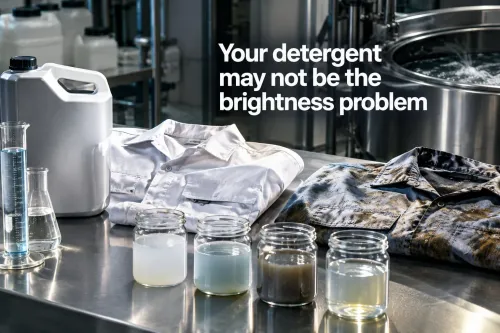

A detergent can that performs well on one Mumbai laundry load may fail on another because fabric, water hardness, stain age, temperature and bleach compatibility change the result. By the end, you will have a practical way to compare SOLVEX with ULTRA or another detergent by cleaning performance, process risk and cost per kilogram of linen.
Key takeaways
- Compare the SDS and TDS, not just detergent labels or claimed stain results.
- Use lower heat and colour-safe chemistry for dyed fabrics and enzyme-sensitive fibres.
- Calculate cost per kilogram washed, including dosage, rewash labour and fabric damage.
- Run identical split loads before replacing a detergent across your laundry operation.
Start with the formula, not the brand name
Surfactant type, alkalinity, enzyme package, optical brightener and bleach compatibility matter more than the can label. Before choosing SOLVEX, obtain its Safety Data Sheet and Technical Data Sheet, then compare them with the alternative’s documents.
A liquid detergent for white clothes stains is not proven by a brighter appearance alone: optical brighteners alter fluorescent light emission without removing soil.
| Evidence to compare | White articles | Coloured articles |
|---|---|---|
| Surfactant and enzyme system | Soil removal on cotton and linen | Soil removal without dye damage |
| pH and alkalinity | Whiteness gain versus fibre stress | Colour loss and redeposition risk |
| Optical brightener | Confirm suitability for white goods | Exclude it if colour appearance changes |
| Bleach compatibility | Check oxygen or chlorine bleach instructions | Check dye and print compatibility |
| Performance result | Reflectance or whiteness after repeated washes | Colourfastness and stain removal after repeated washes |
For a solvex detergent comparison in mumbai, compare evidence under the same wash conditions, not a supplier’s showcase result. Ask for:
- Product density, active matter, recommended dose and storage instructions
- Water hardness, bath ratio, wash temperature, soil load and rinse count used in testing
- Results on your actual white cotton, dyed synthetics and printed garments
- A control wash with the current detergent
- Stain age, pre-treatment concentration, dwell time and whether the item was dried
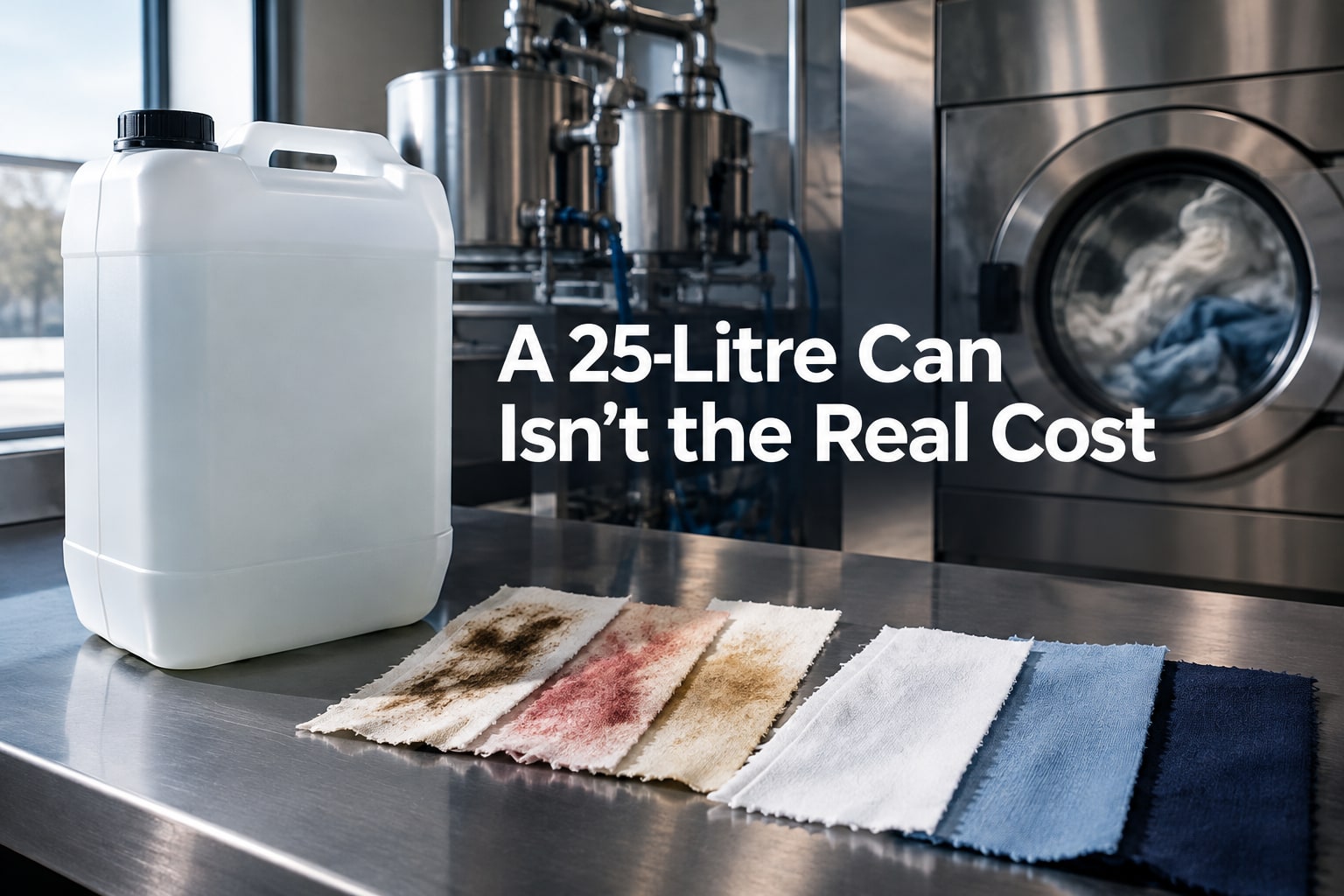
A 25-litre can shows packaging volume, not yield. Treat set protein, oil and tannin stains separately; changing the main-wash detergent alone may not remove them. Use the care label and a hidden-area colourfastness test before approving any formula.
Choose the wash process for the fabric and colour
Dose by kilograms of dry textile, not by the 25-litre can. Use the product’s technical data sheet to set millilitres per kilogram, then adjust only after checking soil load, water hardness and cleaning results. If you dilute manually, measure detergent and water into a dosing container; never pour concentrated liquid directly onto garments.
| Load | Detergent and dose decision | Temperature and rinsing |
|---|---|---|
| White cotton, moderate soil | Use liquid detergent for white clothes stains at the stated white-goods dose. Add oxygen bleach only if the formulation and fabric-care label permit it. | Start at 50–60°C. Run two thorough rinses; add a third when alkalinity, bleach or detergent carryover remains. |
| Coloured cotton or polyester, moderate soil | Use liquid detergent for coloured clothes stains at the stated colour-safe dose. Check dye-transfer control before increasing concentration. | Start at 30–40°C with moderate mechanical action. Run two rinses and inspect for redeposition or colour bleed. |
| Wool, elastane or delicate dyed goods | Use a programme and detergent specifically approved for that fibre; do not transfer a cotton dose. | Keep temperature and action low, then use the fibre label’s rinse sequence. |
Keep the liquor ratio, load weight, dwell time and rinse volumes constant across trials. Excess alkalinity, heat or action can strip colour and redeposit soil. For set protein stains, start below 40°C and record any pre-treatment; heat can lock the stain more firmly.
If the dosing system injects neat product, verify that its calibration matches the target millilitres per kilogram.
Match SOLVEX or another detergent to the stain
A main-wash detergent is the right first tool for fresh, light-to-moderate body soil, food residue, loose dust, and everyday oils that surfactants and enzymes can release during the programmed wash. It is not a guarantee for aged protein, heavy grease, rust, ink, or tannin marks.
| Stain or load | Main-wash decision | Separate treatment |
|---|---|---|
| Fresh body soil or food residue | Use the main wash at its stated dose | Not needed unless the mark remains |
| Dried blood, milk, egg, or other protein | Use only for light, fresh soil | Apply a suitable enzyme pre-treatment; avoid heat before treatment |
| Heavy cooking oil or grease | Use for light deposits | Pre-treat with a compatible degreaser and record dwell time |
| Tea, coffee, or fruit tannin | Test the main wash first | Use a targeted tannin treatment if staining remains |
| Rust, ink, paint, or dye transfer | Do not expect detergent alone to remove it | Use a specialist treatment after checking fabric and colourfastness |
A liquid detergent for white clothes stains should be checked for white-goods use, optical brightener, and compatibility with a separate oxygen bleach. Brightener changes perceived whiteness; it does not remove soil. A liquid detergent for coloured clothes stains needs dye-transfer and colourfastness checks, especially at high alkalinity or temperature.
Record stain age, concentration, dwell time, temperature, and whether the item was dried before treatment.
Calculate the real cost of a 25-litre can
A 25-litre can is packaging, not yield. Calculate product cost per kilogram of dry textile: delivered can price ÷ (25 × density in kg/litre) gives product cost per kilogram; multiply that by the stated dose in grams per kilogram of textile ÷ 1,000. If the dose is in millilitres, convert it using density first.
| Measure | SOLVEX 25 litre can | Alternative detergent |
|---|---|---|
| Delivered product cost | Record invoice price, freight and taxes | Record the same costs |
| Product mass | 25 × stated density | 25 × stated density |
| Dose | TDS dose in g or ml/kg dry textile | TDS dose in g or ml/kg |
| Wash cost | Product cost/kg × dose | Product cost/kg × dose |
| Operating cost | Add water, heating, rinses, labour and rewash cost | Add the same items |
| Handling effort | Record can weight, pump accuracy, lifting, spills and storage space | Record the same items |
For a defensible solvex detergent comparison in mumbai, use the same bath ratio, water hardness, soil load, wash temperature, dwell time and rinse count. Ask ALLIANCE INTERNATIONAL for the current technical data sheet and SDS, including density, active matter, dosage, storage limits and closure specifications; a brand name cannot establish cleaning strength or colour safety.
Use a calibrated pump and record kilograms washed per can. Compare repeated loads, not one unusually bright result: optical brightener can change perceived whiteness without removing soil, while extra rinses or a rewash can erase an apparent price advantage. Record operator minutes and spills separately from chemical cost.
Related products
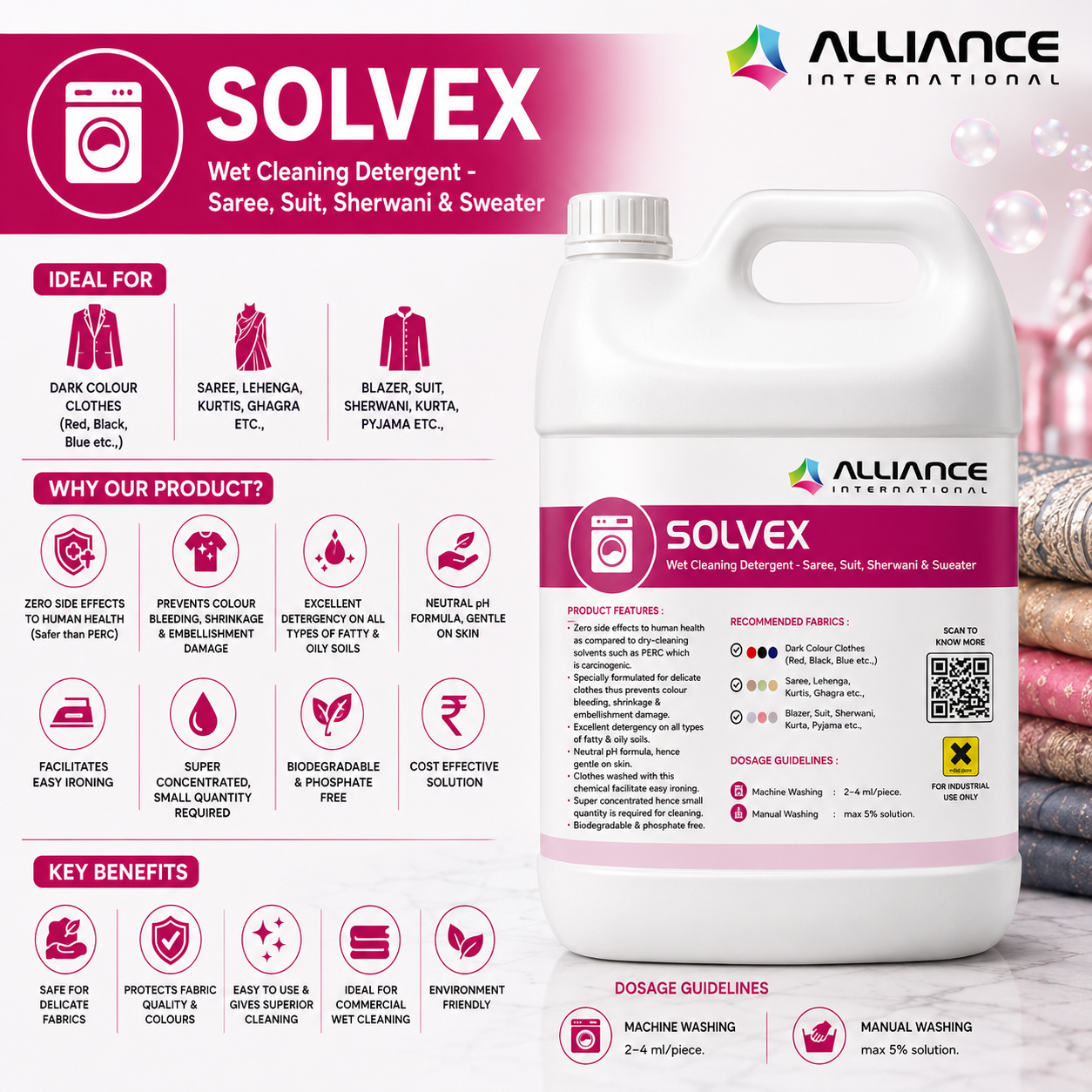 | Detergent Liquids ₹15000 Alliance's SOLVEX is a super concentrated delicate clothes liquid detergent recommended for wet cleaning of clothes found in commercial laundry which... View product → |
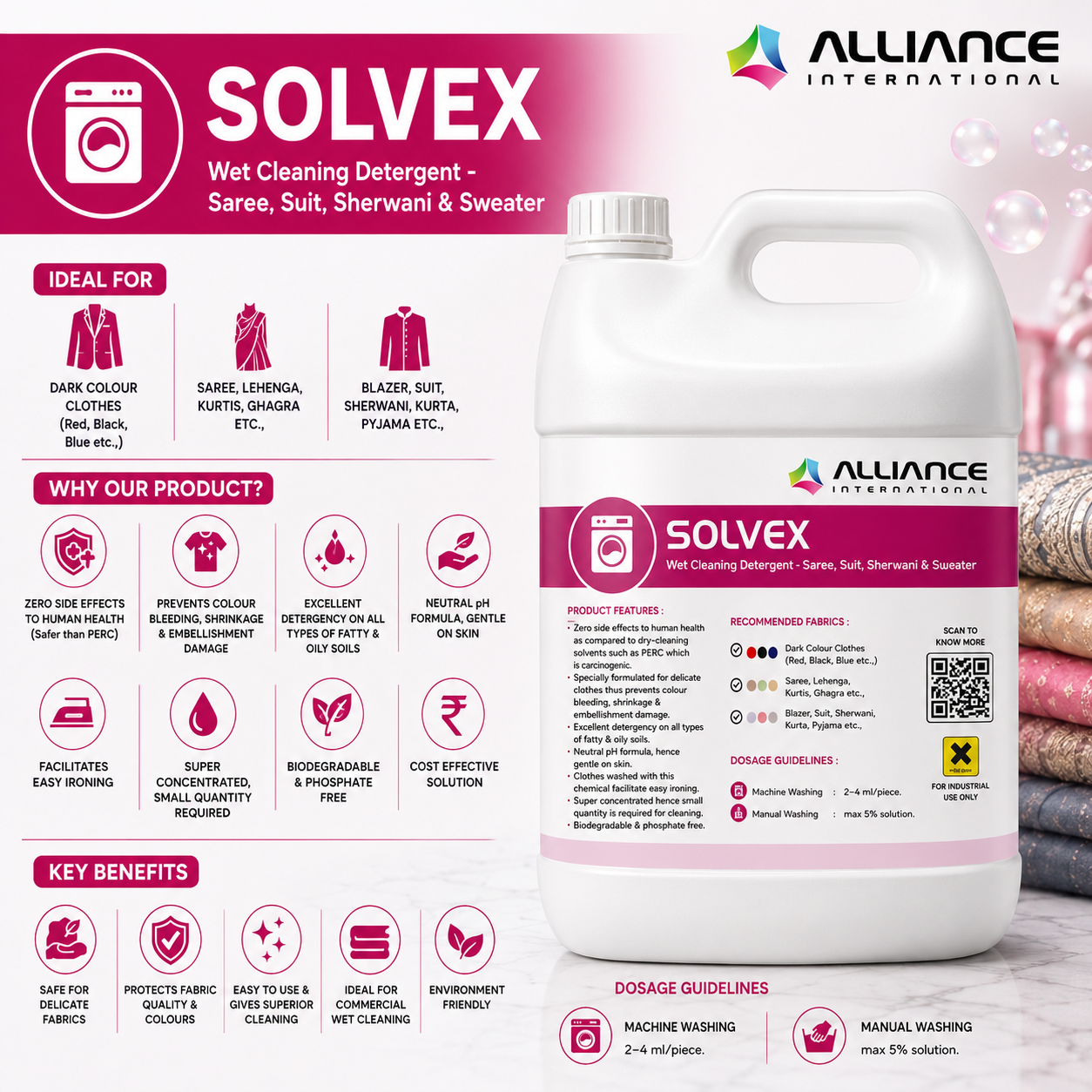 | Detergent Liquids ₹4000 Alliance's SOLVEX is a super concentrated delicate clothes liquid detergent recommended for wet cleaning of clothes found in commercial laundry which... View product → |
Run a Mumbai split-load trial before changing detergents
Use one homogeneous batch of soiled textiles and divide it into matched loads. The choice of solvex can or another detergent for white and colour stains in mumbai is defensible only when detergent is the variable, not the fabric, water or machine setting.
1. Confirm both products against their SDS and technical data sheet. Record detergent density, stated dose, active matter, alkalinity, enzyme package, optical brightener, bleach compatibility and colour-care instructions.
2. Run matched white and coloured loads using the same fabric composition, stain type and age, dry-weight load, liquor ratio, water source and hardness, temperature, mechanical action, dwell time, rinse sequence and drying method.
3. Change only the detergent system and dose. Record millilitres used, bath temperature, cycle time, number of rinses and any pre-treatment, including concentration and dwell time.
4. Repeat the trial with actual production articles. Inspect white goods for soil removal and repeated-wash whiteness; optical brighteners can make fabric look whiter without removing soil. Inspect coloured goods for dye transfer, colour loss and redeposition.
5. Calculate detergent cost per kilogram of dry textile cleaned, not per litre of liquid. Include product density, dosage, water condition and rinse count.
For a solvex detergent comparison in mumbai, use this decision record:
| Measure | SOLVEX load | Other-detergent load |
|---|---|---|
| Stain removal after drying | Record grade | Record grade |
| White reflectance after repeat washes | Record result | Record result |
| Colour change and dye transfer | Record result | Record result |
| Cost per kilogram cleaned | Calculate | Calculate |
Choose the product that meets your white and colour acceptance limits at the lower verified cost without adding rewash or correction work.
Frequently asked questions
What should you compare before choosing SOLVEX or another detergent?
Compare the Safety Data Sheet and Technical Data Sheet for surfactants, alkalinity, enzymes, optical brighteners, bleach compatibility, dosage and handling requirements.
Which wash process suits white and coloured fabrics?
Choose temperature, alkalinity, bleach use and mechanical action according to the fibre, dye stability and stain type. Keep chlorine bleach away from coloured fabrics unless the care process explicitly permits it.
How do you match detergent to a stain?
Use enzyme chemistry for protein, starch or fat-based soils when the formulation supports it; use suitable alkaline and surfactant chemistry for body oils and general soil, then confirm bleach compatibility for whitework.
How should you calculate the cost of a SOLVEX 25-litre can?
Divide the can price by its usable litres, then multiply the dose per kilogram by the wash weight. Add water, labour, rewash, wastewater and fabric-replacement costs to compare the real cost.
How can a Mumbai laundry test SOLVEX against another detergent?
Run matched split loads with the same fabric mix, soil level, machine programme, water conditions, dose and drying method. Record whiteness, colour change, residual odour, rewashes and cost per kilogram.
Related products
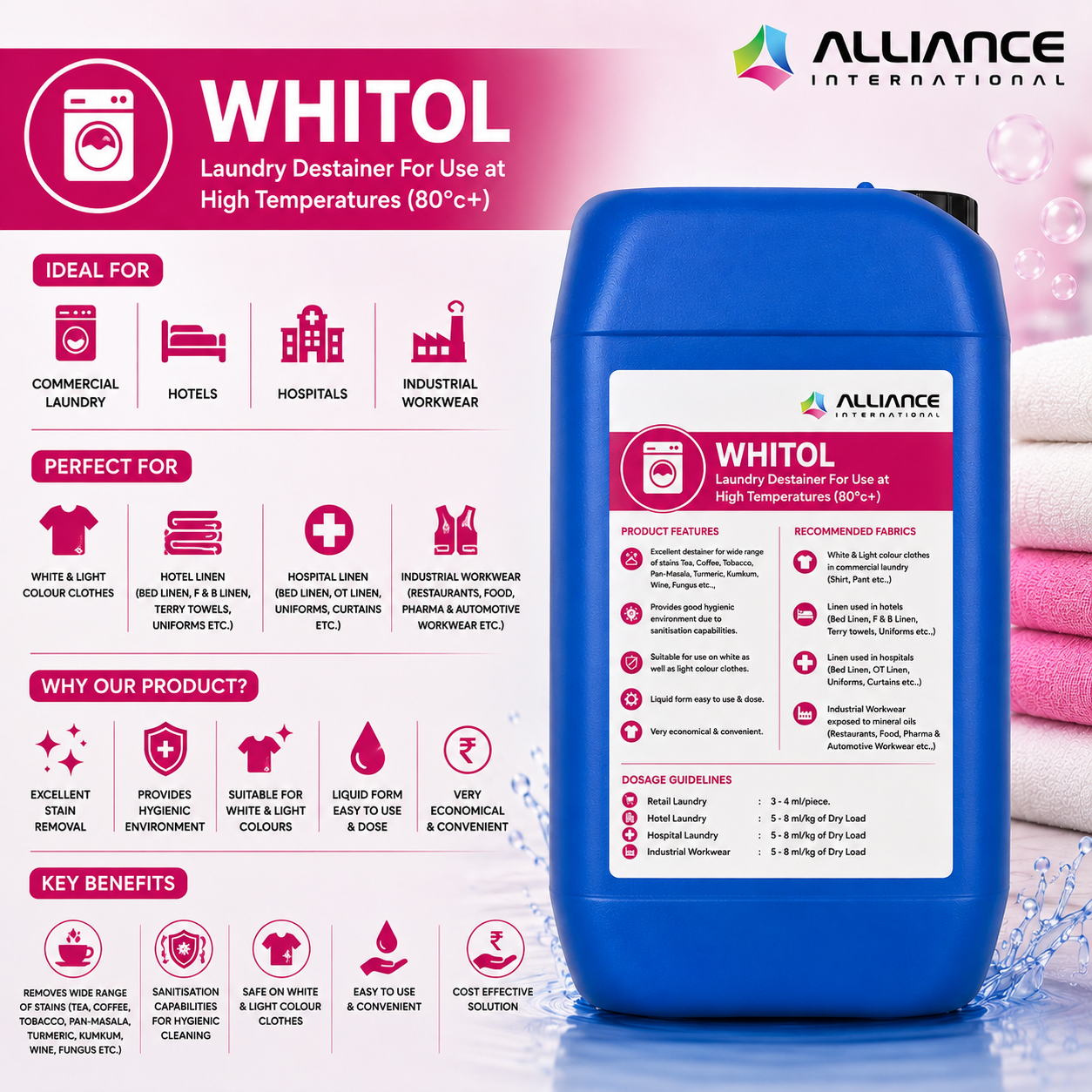 | Bleaches ₹7000 Alliance's WHITOL is a high temperature laundry detainer based on oxygen bleaching agents. View product → |
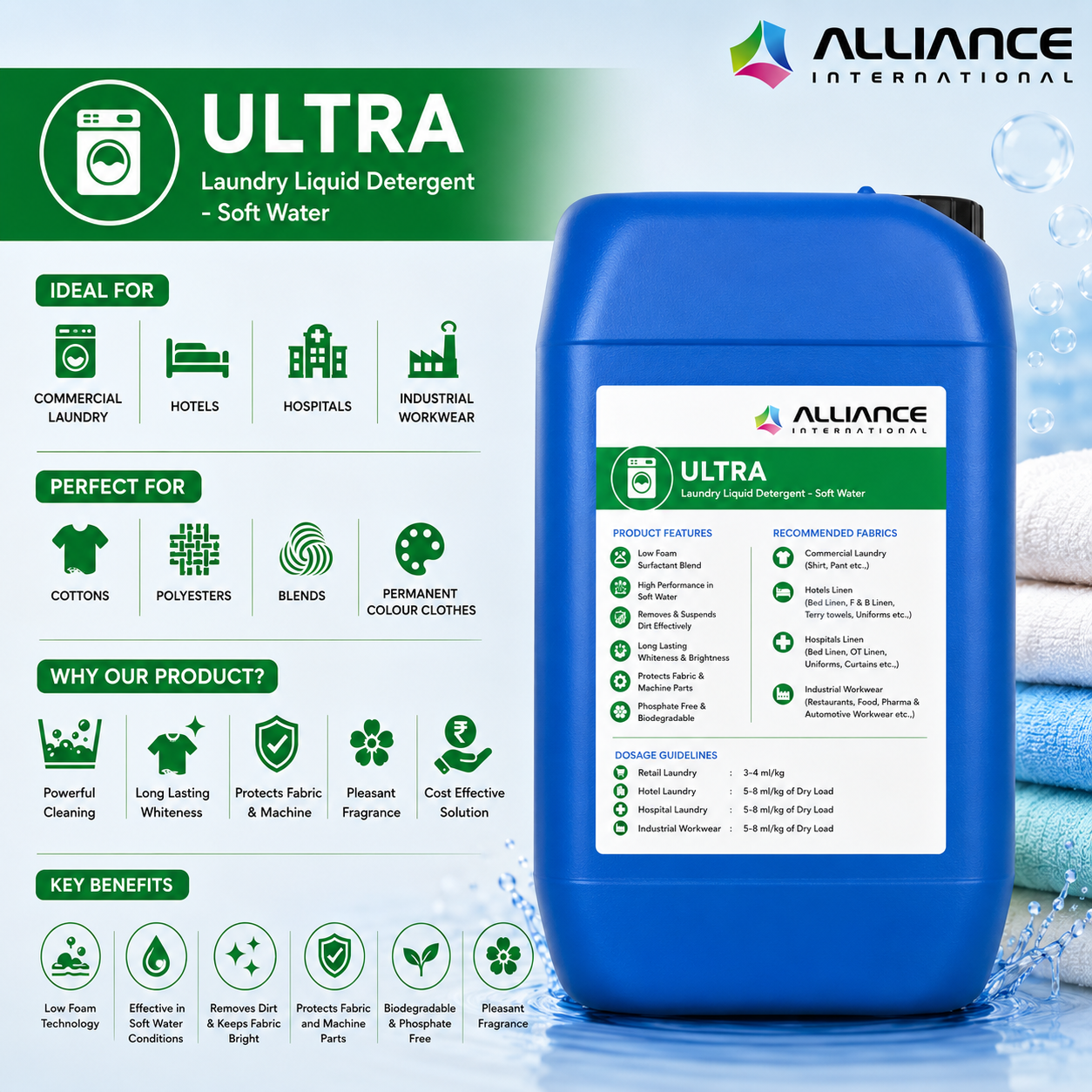 | Detergent Liquids ₹8500 Alliance's ULTRA is an advanced laundry liquid detergent recommended for mainline washing of all types of permanent colour clothes of cottons,... View product → |
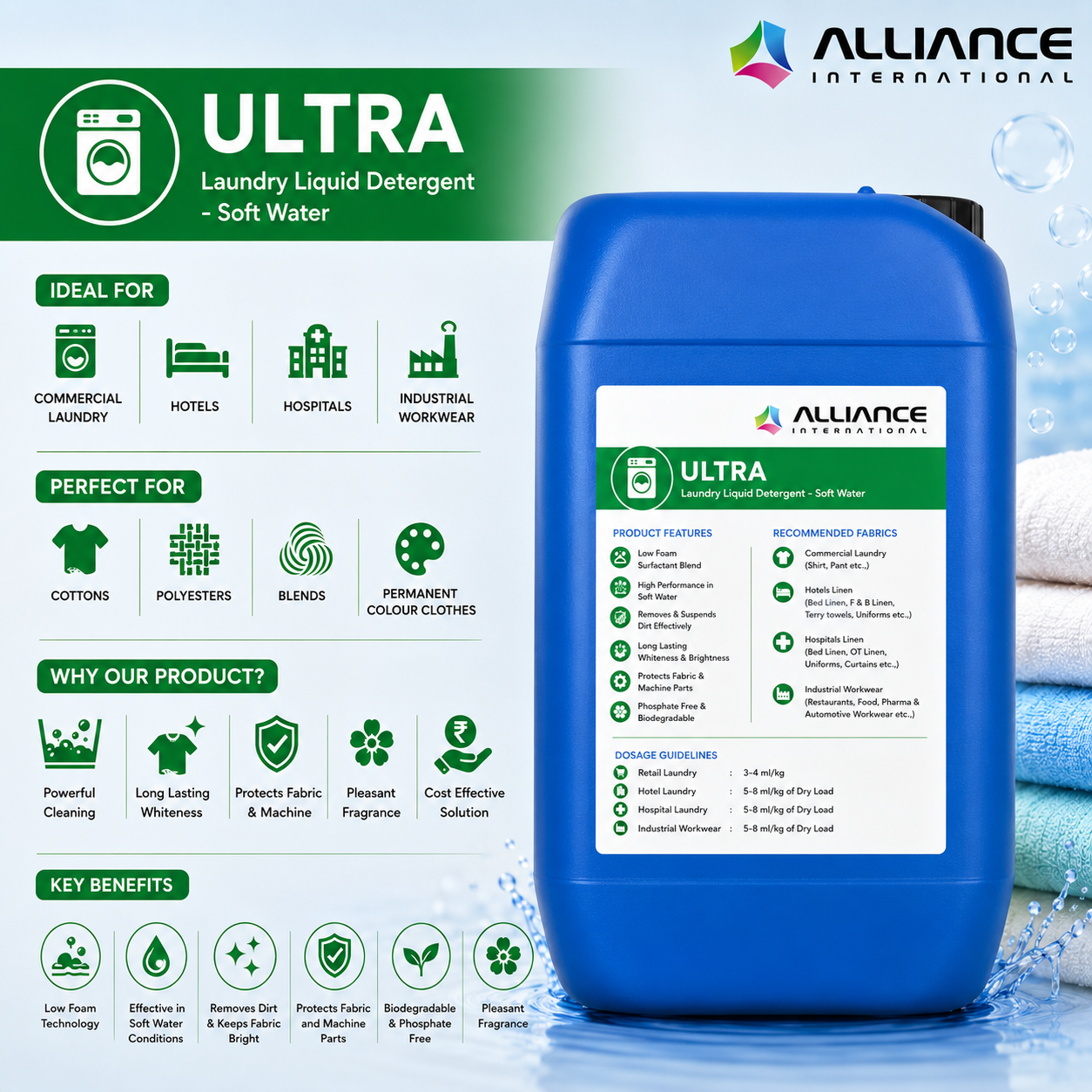 | Detergent Liquids ₹8500 Alliance's ULTRA is an advanced laundry liquid detergent recommended for mainline washing of all types of permanent colour clothes of cottons,... View product → |